
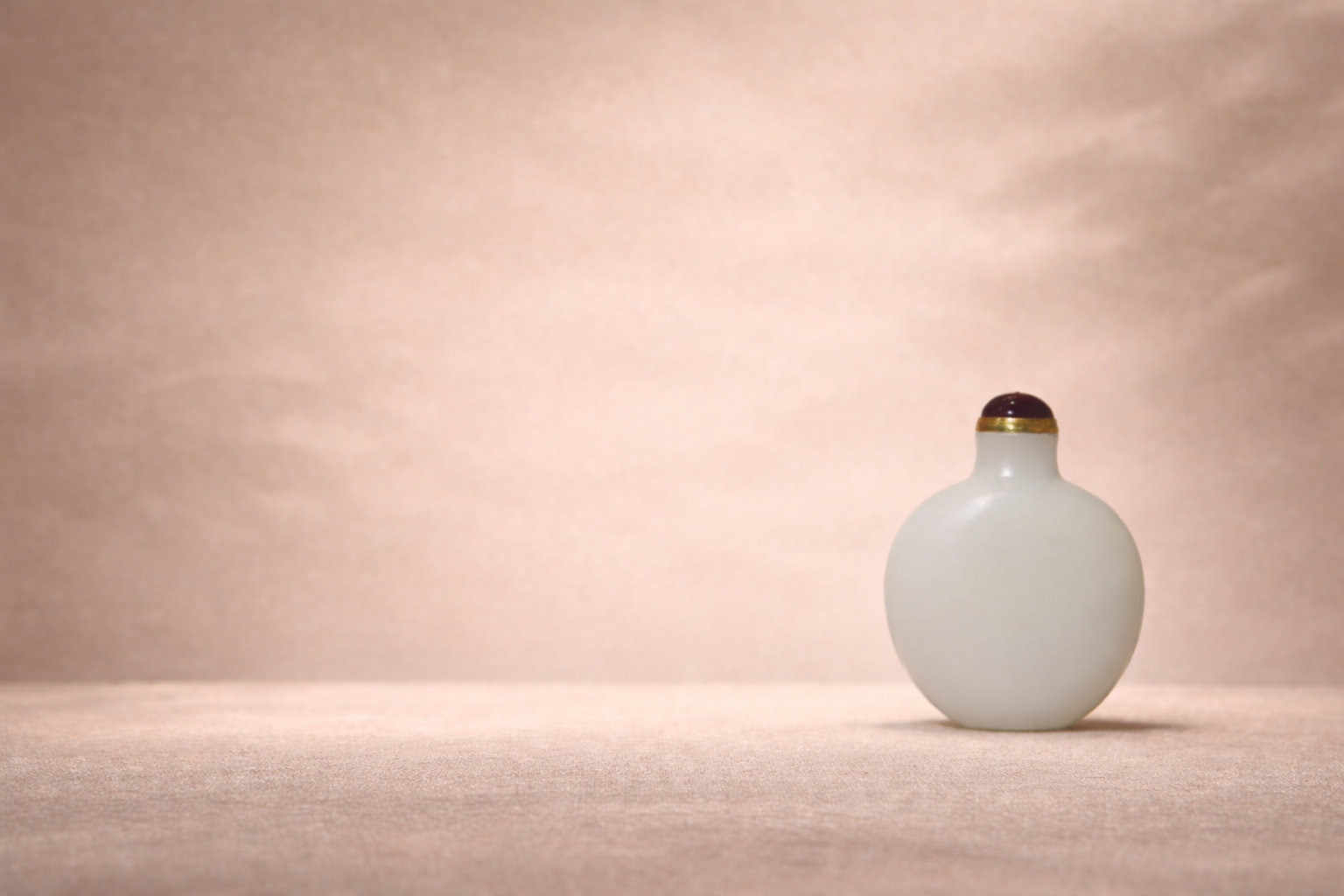
Palm-Held Worlds
Snuff Bottles, Seen as Intimate Sculptures
Curated by
LA Asian-Pacific Art Gallery, Los Angeles
Palm-Held Worlds: Snuff Bottles, Seen as Intimate Sculptures
This online exhibition approaches Chinese snuff bottles not as decorative artifacts or historical curiosities, but as intimate sculptures shaped by the hand.
Snuff bottles begin with form.
Before imagery or ornamentation, the vessel must find balance within the palm. Proportion, contour, and stability emerge through use, revealing how sculptural integrity can exist at a reduced scale. Here, form is functional, bodily, and quietly precise.
Some bottles move beyond abstraction and take on bodily presence. These are not anatomical representations, but tactile approximations—objects shaped to be held rather than observed. Their proportions respond less to visual realism than to repeated physical contact, approaching the body as experience rather than image.
Surface is where time becomes visible. Through glaze, pigment, wear, and softened edges, snuff bottles record prolonged handling. Their surfaces are not static finishes, but accumulations of touch, memory, and duration.
Not all objects seek explanation. The final section gathers works that resist clear classification or narrative. Their meanings remain personal, incomplete, and unresolved—mirroring the private nature of snuff bottle ownership itself. Here, the object does not perform for the viewer; it simply exists, retaining its relationship with an unseen hand.
This exhibition intentionally preserves a slower mode of viewing. It invites reflection on what it means to encounter an object that resists spectacle and favors intimacy—where meaning is not imposed, but discovered through proximity, scale, and touch.
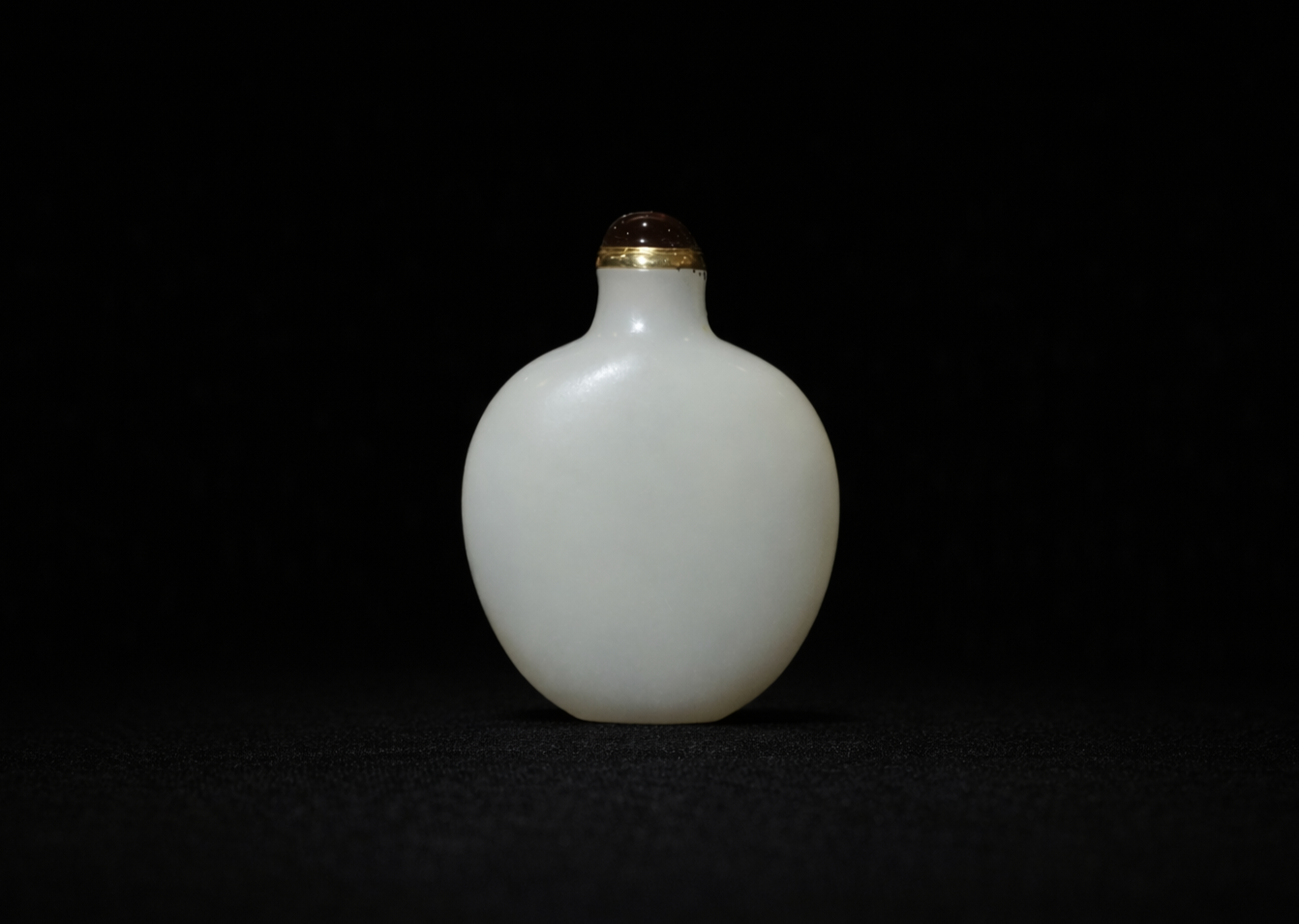
Snuff bottles begin with form.
Before ornamentation, before imagery, the vessel must achieve balance within the hand. The works in this section emphasize proportion, contour, and stability, revealing how sculptural integrity can emerge within a reduced scale.
Here, form is not decorative—it is functional, bodily, and quietly precise.
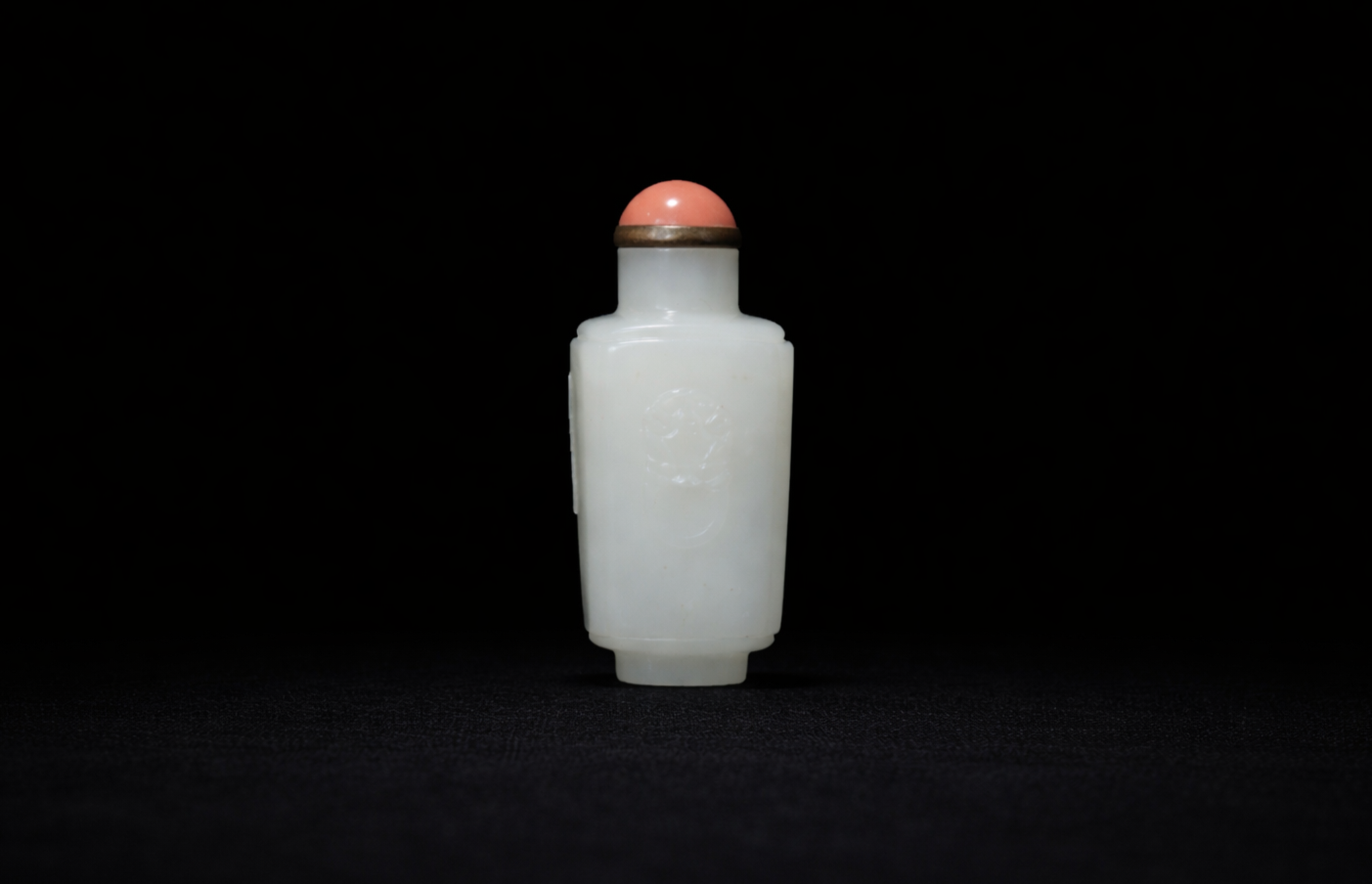
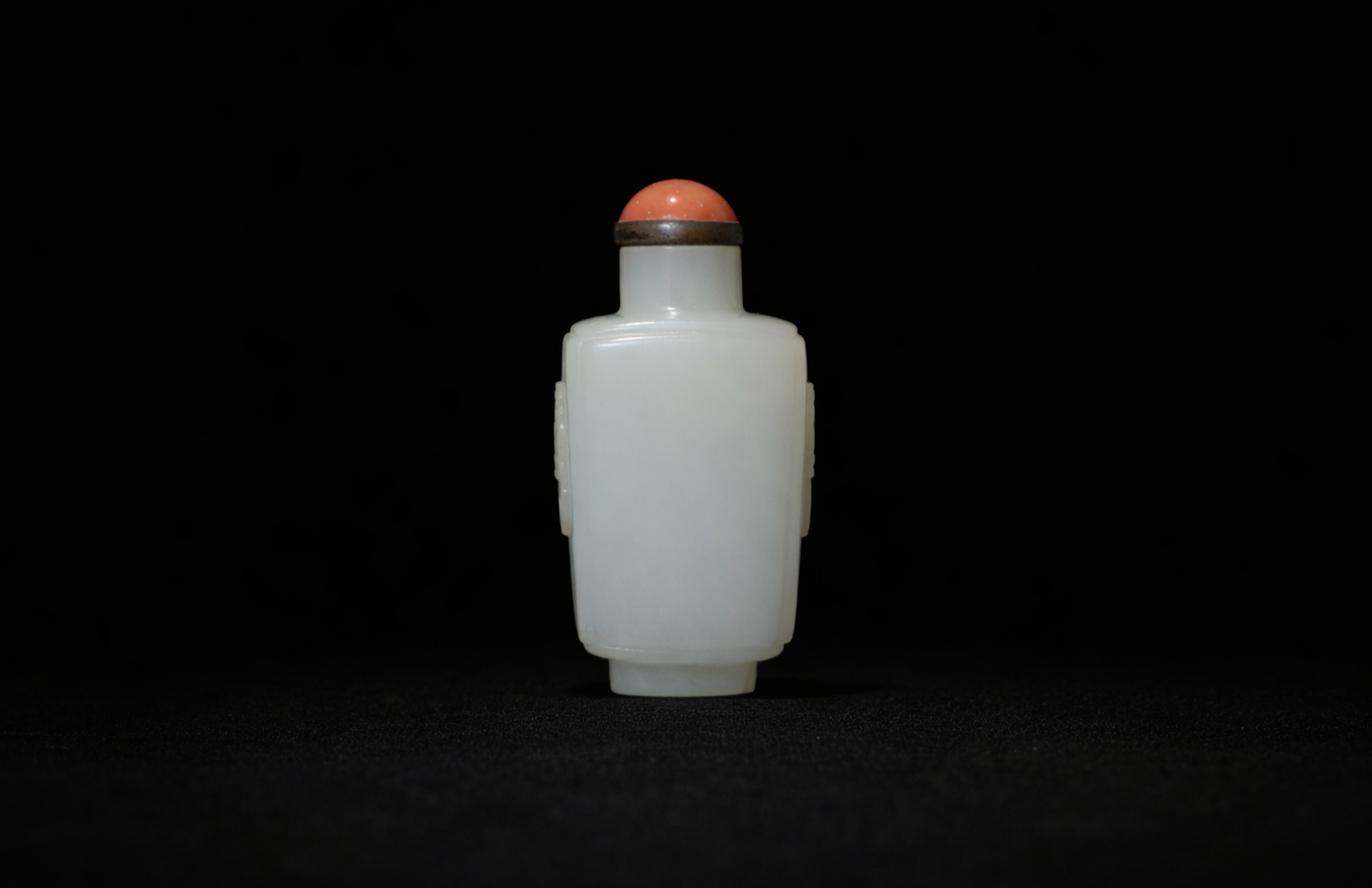
Some snuff bottles move beyond abstraction and take on bodily presence.
Figural forms within these objects are not anatomical studies; they are tactile approximations of the human figure, shaped to be held rather than observed. Their proportions respond less to visual realism and more to repeated physical contact.
In this section, the object approaches the body not as representation, but as experience.
Surface is where time becomes visible.
Through glaze, pigment, and wear, snuff bottles record the traces of use. Polished edges, softened lines, and subtle variations in color speak to prolonged handling rather than pristine preservation.
These surfaces are not static finishes—they are accumulations of touch, memory, and duration.
Not all objects seek explanation.
This final section gathers works that resist clear classification or narrative. Their meanings remain personal, incomplete, and unresolved—mirroring the private nature of snuff bottle ownership itself.
Here, the object does not perform for the viewer. It simply exists, retaining its relationship with an unseen hand.
All works presented in this exhibition are courtesy of private collectors. ©LA Asian-Pacific Art Gallery