
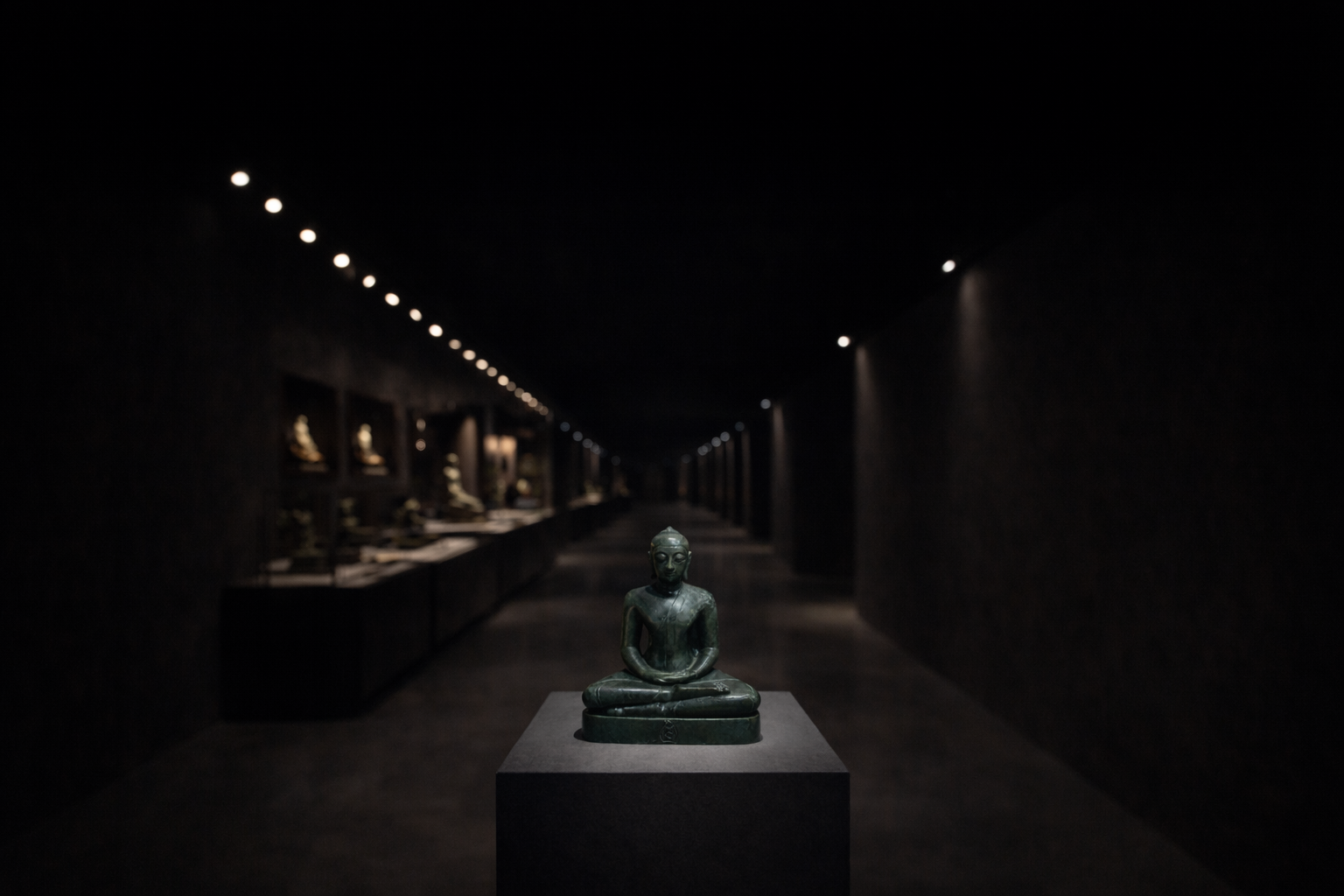
Seated Buddha
Mid-20th century (circa 1950-1970)
Jade
Himalayan stylistic tradition
This work reveals itself gradually—through proximity, material presence, and sustained attention rather than immediate visual impact.
Viewing Note
Curatorial Reflection
This seated Buddha sculpture invites a quiet, sustained encounter.
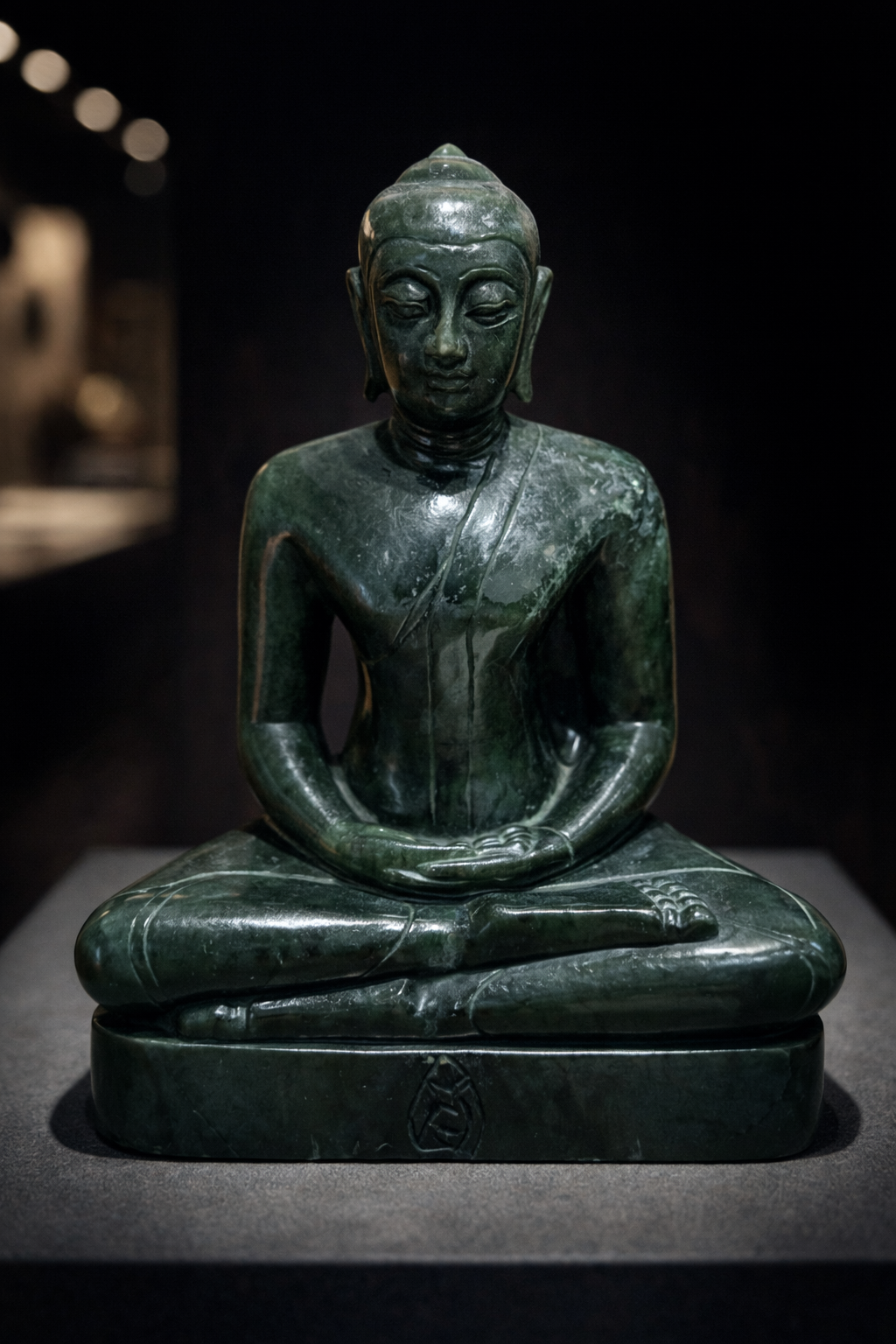
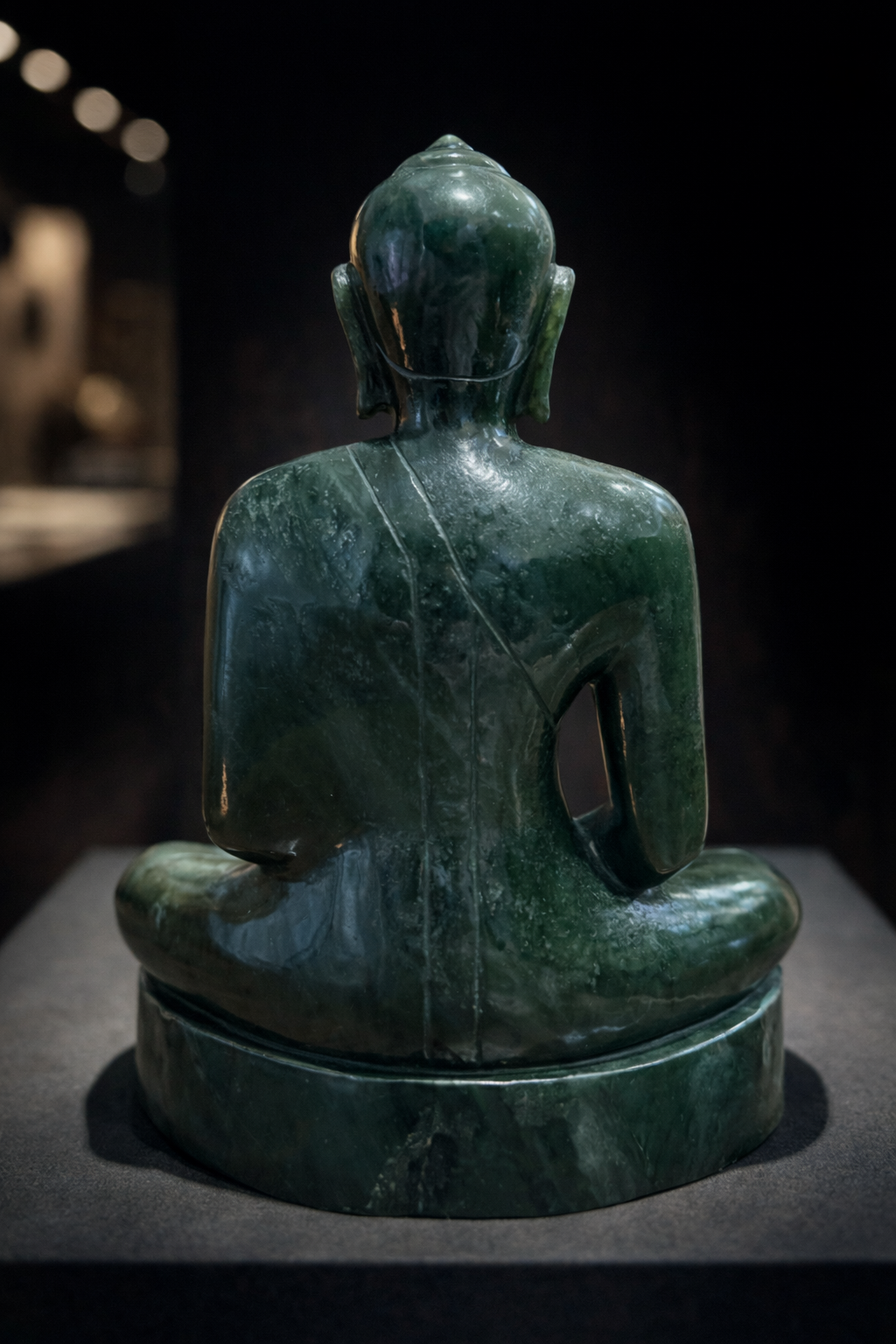
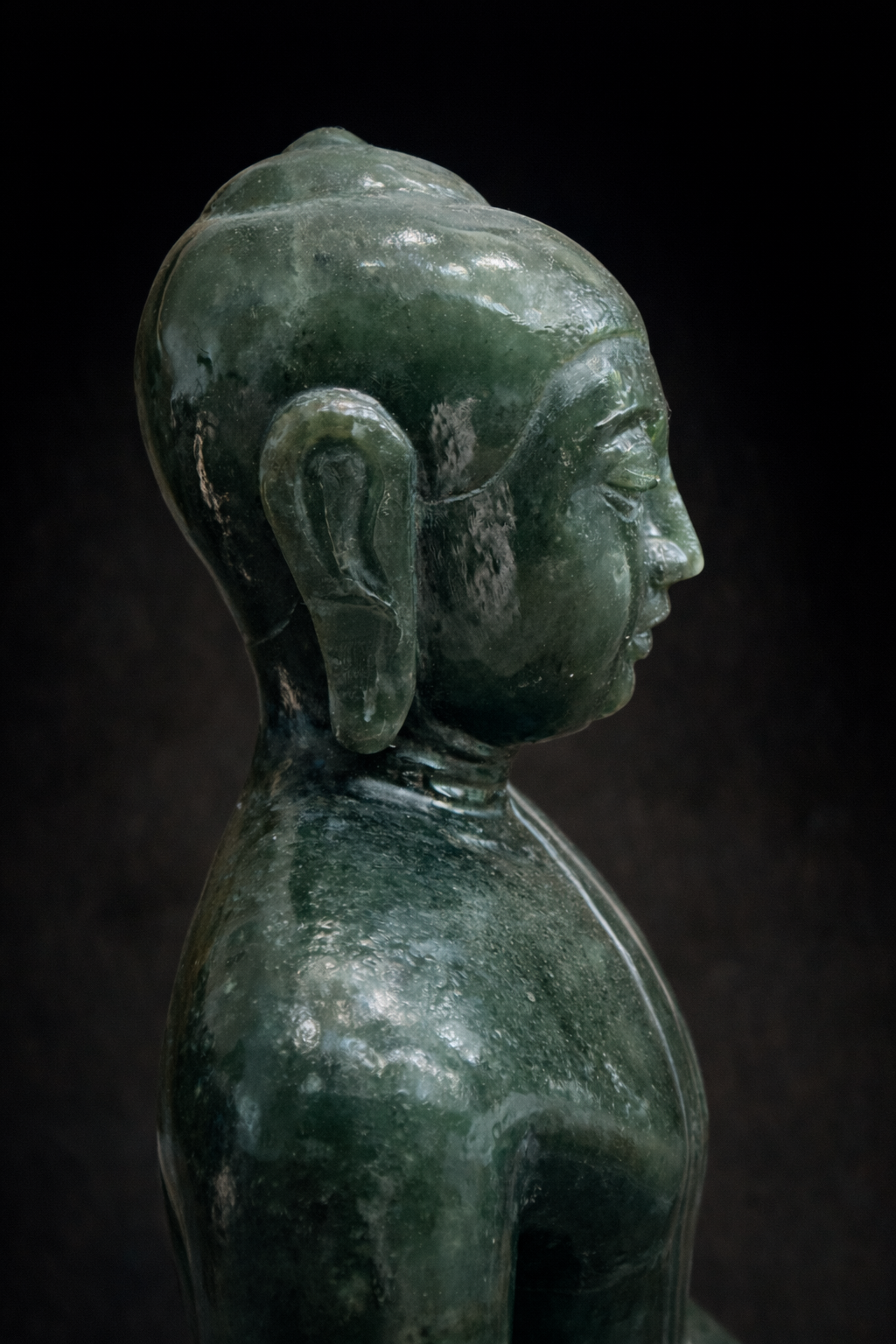
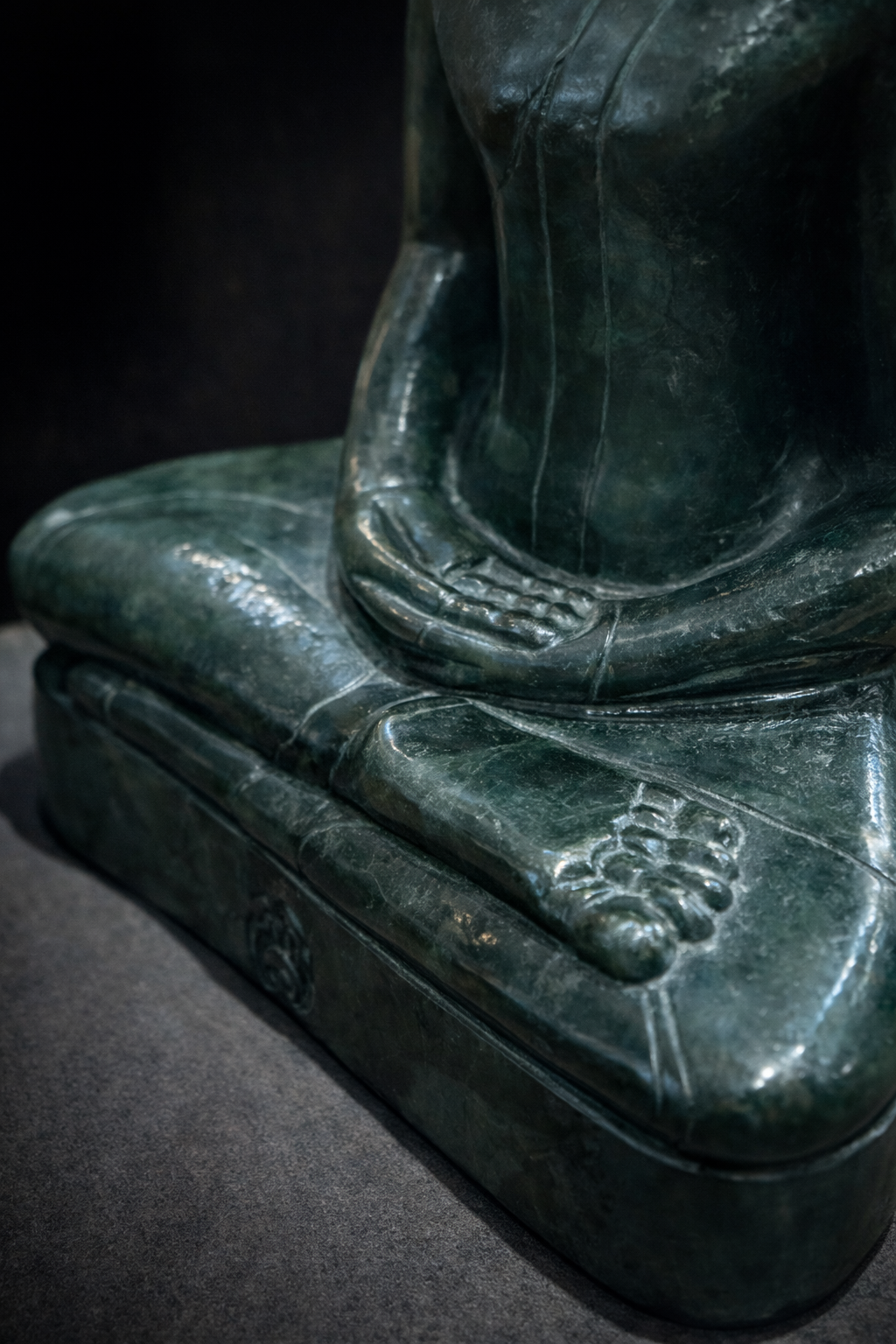
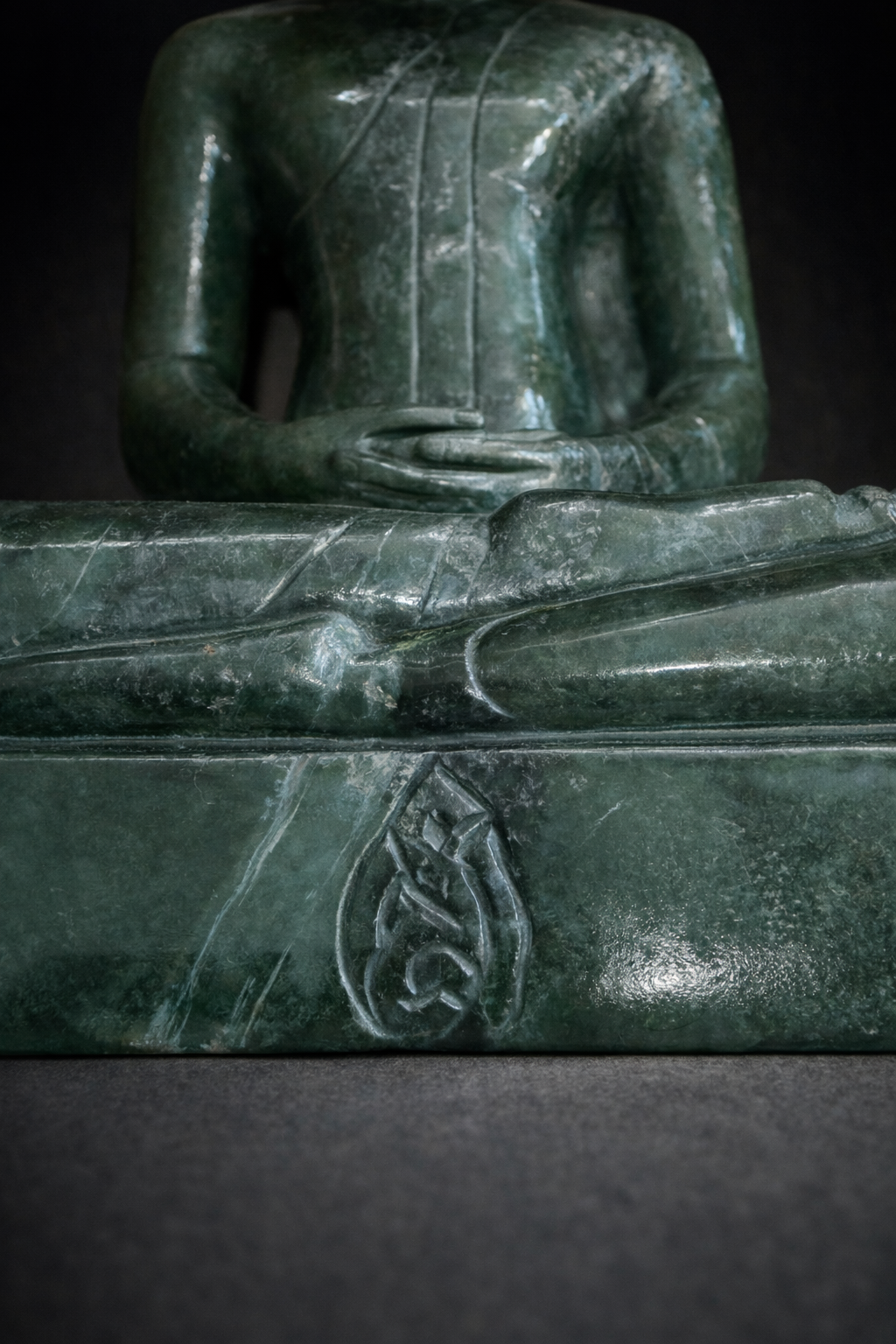
Its softened proportions and restrained drapery shift attention away from iconography and toward inner composure. The figure’s presence is inward rather than declarative, shaped by balance and stillness instead of monumentality.
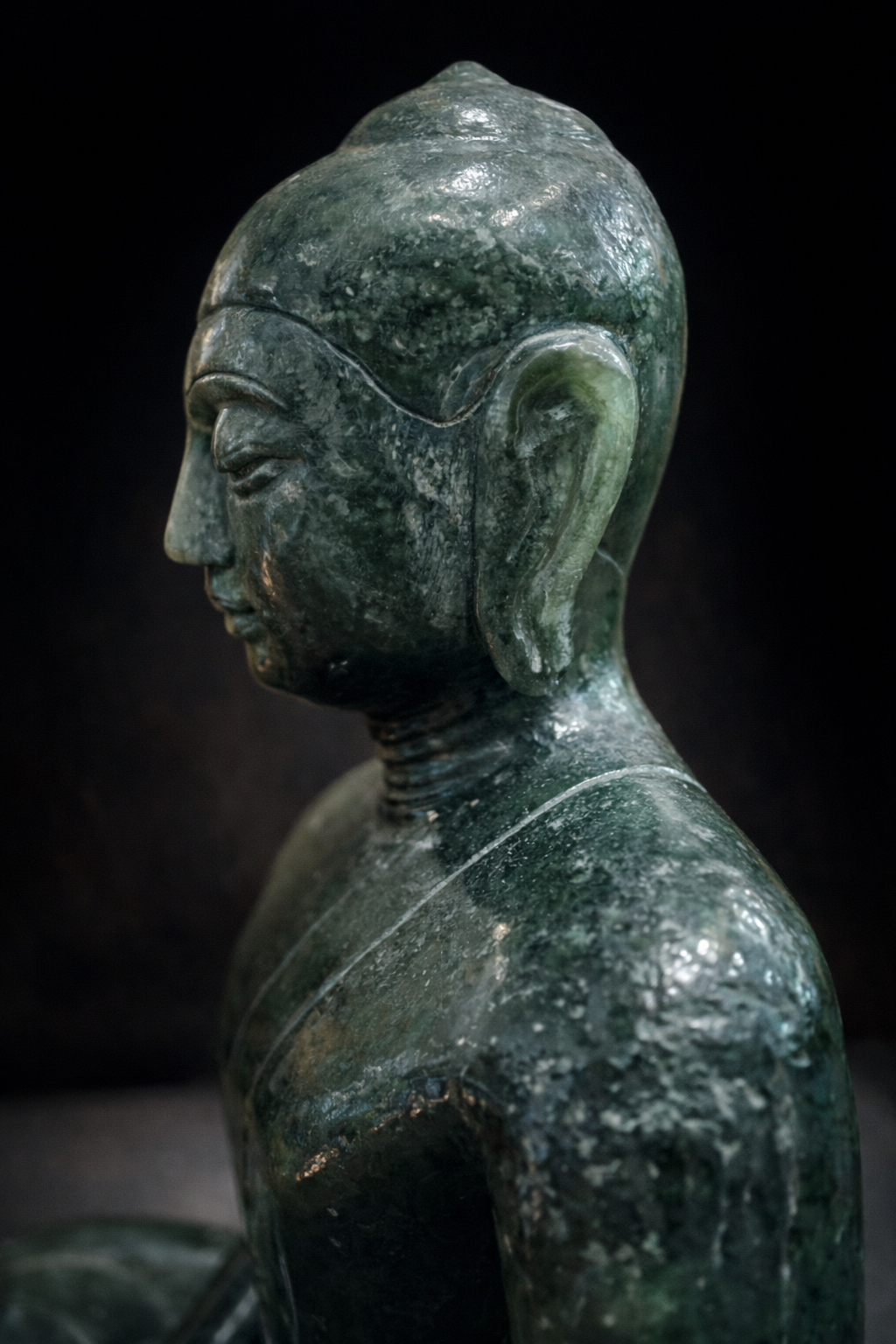
Carved in jade, the work emphasizes tactility and material intimacy. Natural variations within the stone remain visible, allowing the sculpture to retain a sense of immediacy rather than polished perfection. The surface does not assert authority; it draws the viewer closer.
Stylistically, the sculpture resonates with Himalayan Buddhist traditions, where spiritual meaning is conveyed through restraint and inward focus. Yet the work resists fixed geographic or chronological classification. What emerges instead is a timeless condition—one of equilibrium, silence, and attentive presence—allowing the figure to exist beyond a single historical frame.
Scholarly Note
The sculpture shows stylistic affinities with Himalayan Buddhist traditions, while its material points to a distinct and localized carving practice.